Political Law & Election Counsel
Representing Democratic candidates, campaigns, and party organizations — and select candidates in nonpartisan matters — with the institutional knowledge that comes from six election cycles on the inside.
Political Fluency.
Real Results.
As a political law attorney serving candidates and committees across South Florida, Marc has served as election counsel across six cycles since 2012 — including as Lead County Counsel in three, among them two presidential campaigns — served as General Counsel to the Miami-Dade Democratic Party, and sat on the DNC Convention Rules Committee. He has appeared before canvassing boards and litigated election matters in state and federal court.
His casework includes a Florida court issuing a writ of quo warranto against a sitting governor and a federal First Amendment challenge that prompted the Florida Division of Elections to issue an advisory opinion addressed to counsel — providing the relief sought before the court acted. His election law work spans voter protection across multiple presidential and statewide cycles, canvassing board and recount proceedings, and federal civil rights litigation involving voting rights and constitutional matters — including Joyner v. Presidential Advisory Commission on Election Integrity, selected by the Federal Judicial Center as a case study in emergency election litigation.
2012 – 2024
Presidential Campaigns
Notable Election Law Cases
Reported decisions in landmark election and political law matters — from challenging the Governor of Florida to protecting voter data at the federal level.
Disclaimer: The following is a selection of reported decisions for informational purposes only. Past results do not guarantee or predict a similar outcome with respect to any future matter. The outcome of any particular case depends on the facts, law, and circumstances unique to that case.
Leon County Circuit Court
Leon County Circuit Court issuing writs of quo warranto against Governor DeSantis and his appointee, ordering the administration to legally justify its executive order removing a duly elected Broward County School Board member from a seat he had won. A constitutional challenge to executive overreach at the intersection of separation of powers and Amendment 4 rights. Covered by Florida Politics.
Miami-Dade County Circuit Court
2024 WL 4766249
Representing Miami residents challenging Referendum 3 — a ballot question sponsored by Commissioner Joe Carollo asking voters whether to keep outdoor gym equipment installed at Maurice A. Ferré Park. Plaintiffs alleged the ballot language was a leading question that violated Florida election law’s clear-and-unambiguous standard and failed to disclose that the equipment had been installed without proper permitting. The court denied the City’s motions to dismiss. See also: Miami Herald (Aug. 12, 2024); Miami Herald Editorial Board (Aug. 13, 2024).
United States District Court
Southern District of Florida
2018 WL 481880
Representing the ACLU of Florida, the Florida Immigrant Coalition, and individual plaintiffs challenging the Trump administration’s collection of personal voter data from all fifty states. Filed against the Executive Office of the President and the Office of the Vice President. The presidential commission was dissolved while litigation was pending; the government confirmed the data would not be transferred to DHS.
In 2023, the Federal Judicial Center — the research and education arm of the federal judiciary — selected the case as a case study in emergency election litigation and published it in the FJC’s judicial education catalog. See also: Wikipedia.
Miami-Dade County Circuit Court
Counsel in ballot image retention litigation against the Miami-Dade Supervisor of Elections. In October 2025, the Supervisor agreed to begin preserving digital ballot images going forward, mooting the case on the eve of trial. See also: Florida Bulldog, Jan. 2022.
United States District Court
Southern District of Florida
2022 WL 14664662
Representing the Florida Democratic Party and individual election observers in a First Amendment challenge to a DeSantis-signed statute broad enough to criminalize election observers for privately communicating vote information to their own party before polls closed. With the case pending before the federal court, the Florida Division of Elections issued an advisory opinion addressed to counsel, and the state represented it would not prosecute the speech at issue. The preliminary injunction was denied as moot; the lawsuit accomplished its purpose.
United States District Court
Northern District of Florida
2016 WL 6080225
Representing intervenor Sandra Del Castillo in a voting rights action brought by the Florida Democratic Party. Following Hurricane Matthew, the court granted a preliminary injunction extending Florida’s voter registration deadline by seven days — to October 18, 2016 — finding that the storm had deprived affected citizens of a meaningful opportunity to register to vote.
In 2023, the Federal Judicial Center — the research and education arm of the federal judiciary — selected the case as a case study in emergency election litigation.
United States District Court
Middle District of Florida
720 F. Supp. 3d 1231
Middle District of Florida dismissing defamation claims arising from public criticism related to the January 6, 2021 Capitol events. Dismissed on statute-of-limitations grounds. Related litigation is presently pending in Orange County, Florida.
Inside Democratic Politics Since 2012
Marc's political engagement predates his legal career — his father, Richard J. Burton, served as Florida recount counsel for Vice President Gore in 2000, and Marc went on to intern in Senator Schumer's office and work on Hillary Clinton's 2006 Senate re-election while at NYU. Since becoming a lawyer, every campaign and party position has built the network and institutional knowledge his clients rely on.
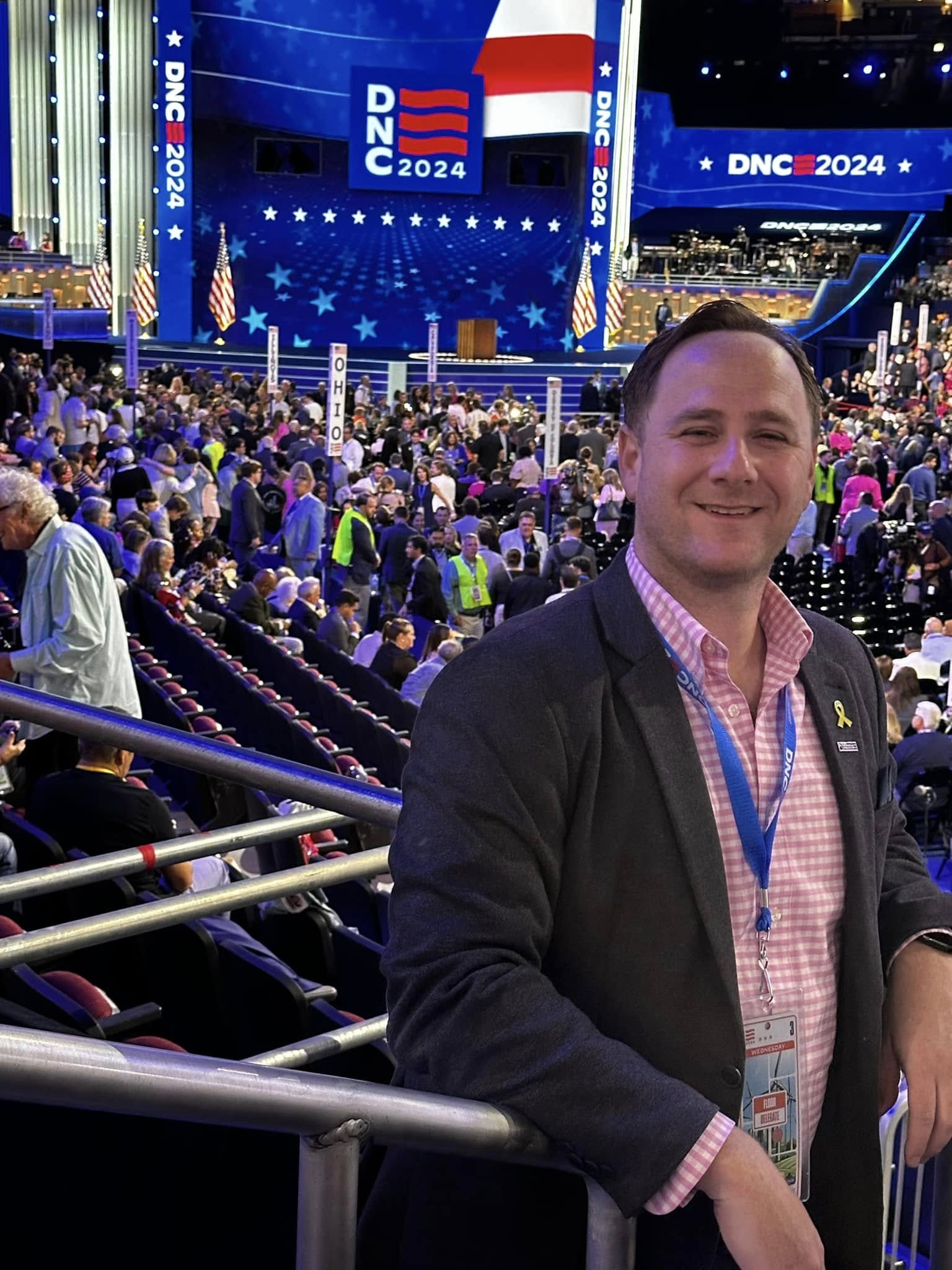
Chair: Gov. Tim Walz · Floor remarks on C-SPAN 2024
Kamala Harris for President 2024
Kamala Harris for President 2024
Florida Democratic Party 2020 · 2022 · 2024
Joe Biden for President 2020
Hillary Clinton for President 2016
Barack Obama for President 2012
Political & Election Law — FAQ
The following information is provided for general educational purposes only.
It does not constitute legal advice and does not create an attorney-client relationship.
What is an election contest in Florida?
Under § 102.168, Florida Statutes, certification of an election may be contested in circuit court by any unsuccessful candidate, any voter qualified to vote in the election, or any taxpayer. The complaint — filed with the clerk of the circuit court along with the prescribed fees — must be filed within 10 days after midnight of the date the last certifying board officially certifies the results. The statute recognizes four grounds for contest: misconduct, fraud, or corruption by an election official or canvassing board member sufficient to change or place in doubt the result; ineligibility of the successful candidate or, in the case of a referendum, the proposed constitutional amendment; receipt of illegal votes or rejection of legal votes sufficient to change or place in doubt the result; and bribery of a voter, election official, or canvassing board member.
What happens during a Florida recount?
A machine recount is triggered under § 102.141 when the margin between candidates is one-half of a percent or less of the votes cast for the office. The machine recount is conducted by running ballots through automatic tabulating equipment. If the margin remains one-quarter of a percent or less, § 102.166 requires a manual recount of undervotes and overvotes. Manual recounts are conducted by counting teams of at least two electors appointed by the canvassing board; disputed ballots go to the board for determination. A vote is counted if there is “a clear indication on the ballot that the voter has made a definite choice.” Manual recounts must be open to public observation.
What is the role of a canvassing board in Florida?
Florida’s county canvassing boards are three-member panels composed of the supervisor of elections, a county court judge — who serves as chair — and the chair of the board of county commissioners. Meetings must be held in a publicly accessible location with at least 48 hours’ public notice. The board publicly canvasses absentee and provisional ballots, with party and candidate watchers permitted to observe. It examines precinct returns and may order retabulations if returns are missing, incomplete, or contain obvious errors, and oversees any recount ordered under § 102.141.
What is voter protection, and what does a voter protection lawyer do?
Voter protection is the legal and operational effort to ensure that every eligible voter can cast a ballot and have that ballot counted. Voter protection teams serve as a bulwark against voter suppression by deploying lawyers and authorized observers to polling locations and county canvassing board meetings — monitoring election administration, challenging unlawful ballot rejection, and responding to voter intimidation or suppression. When necessary, voter protection counsel seek emergency injunctive relief. Marc A. Burton has served in voter protection roles across six election cycles, including as Voter Protection Director for the Florida Democratic Party.
Ready to Discuss Your Case?